
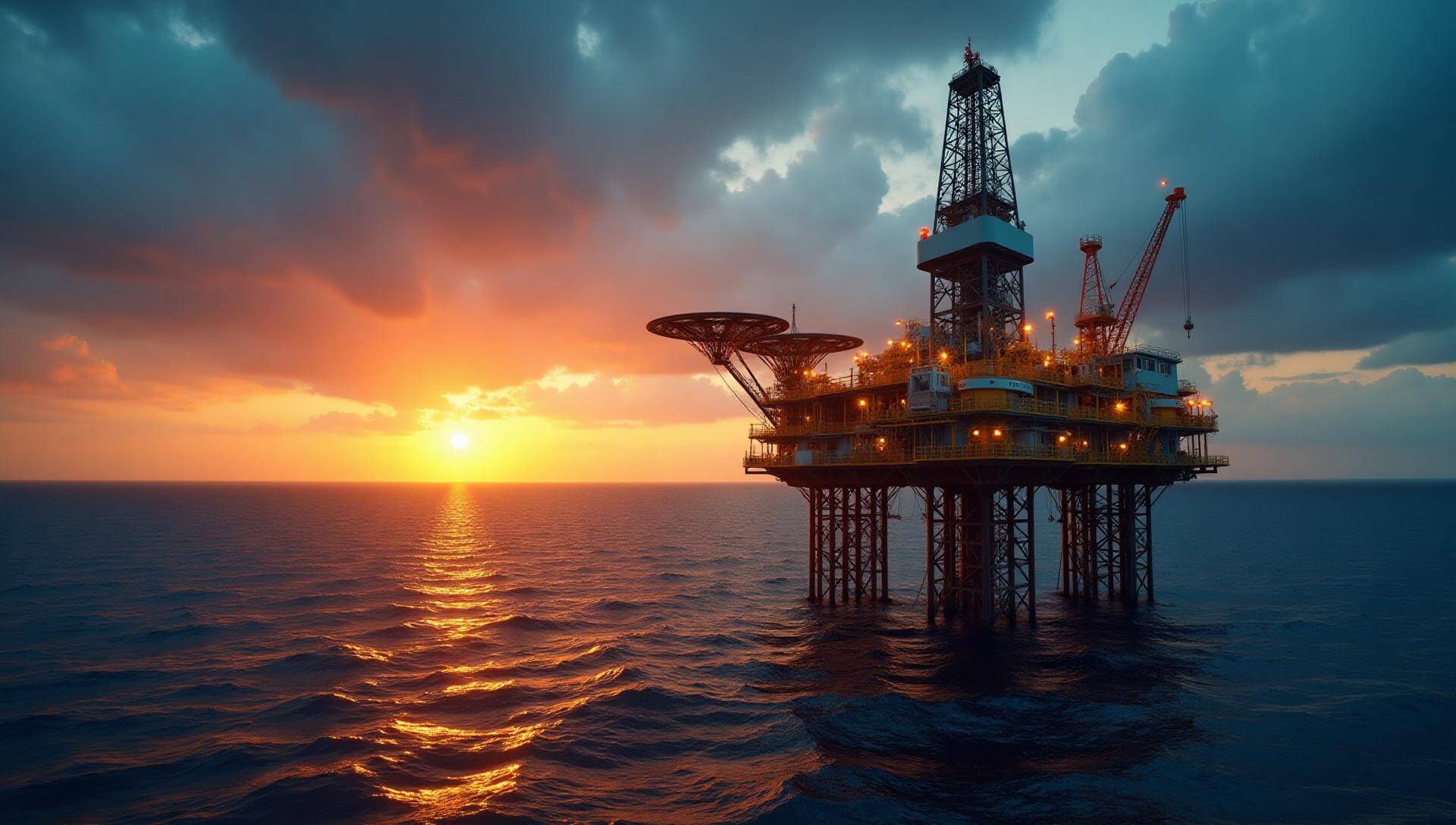
Oil & Gas
Automation for offshore naval vessels, AGVs for hazardous areas, welding robots and data acquisition systems in extreme environments.
Automation of Offshore Naval Vessels
We develop control and automation systems for offshore naval vessels intended for operations in extreme conditions.
Technical analysis of shipboard production systems, drafting functional specifications and PLC/HMI development.
Systems for handling, welding, safety and diagnostics with multi-vendor integration tests.
Areas of application:
- •Production Systems: shipboard systems
- •PLC & HMI: handling, welding
- •Safety: safety systems, diagnostics
- •Integration: multivendor testing, SCADA
Naval Automation
Control systems for offshore production vessels
Welding Systems
Robot welding automation with trajectory control
Safety & Diagnostics
Safety systems and predictive diagnostics
SCADA Integration
Multi-vendor PLC, HMI, SCADA integration test
Self-driving vehicles for Oil
We design control systems for self-driving vehicles intended to operate in dangerous areas of the Oil industry .
Integration laser sensors, self-alignment algorithms and safety logics for autonomous operations.
Commissioning in highly complex areas with industrial radio control and integrated safety.
Areas of application:
- •Autonomous Navigation: laser sensors, LIDAR
- •Safety Logic: obstacles, dangerous areas
- •Remote Control: industrial radio control
- •Supervision: HMI, diagnostics, fleet
AGV Control
PLC as the operating brain with safety and maneuver logics
Laser Navigation
Laser sensors and self-alignment algorithms
Industrial Radio
Industrial radio control integration with safety
Hazardous Areas
Autonomous operations in oil hazardous areas
Robot Welding Automation
We develop systems motion control for welding robots with trajectory prediction and modification at runtime.
Usage OPC-UA for real-time data visualization and server configuration in the PLC project.
Motion library synchronization to comply with trajectory prediction and modification requirements.
Areas of application:
- •Motion Control: position, speed, interpolated
- •Trajectory: prediction, runtime modification
- •OPC-UA: integrated server, real-time
- •HMI: supervision, diagnostics
Welding Robots
Motion controller for welding axes movement
OPC-UA Server
Real-time data visualization and integrated configuration
Runtime Trajectory
Edit trajectory at runtime for adaptation
Motion Sync
Motion library synchronization for precision
Data Acquisition Middleware
Let's implement middleware for data acquisition from PLC to logging and visualization systems.
Integration ADS/EventLogger TwinCAT with Redis for data history and diagnostics with very low refresh rate.
Event severity management for message distinction and publication on Redis topics.
Areas of application:
- •ADS Integration: PLC variables, events
- •Redis Streaming: historical, real-time
- •Event Logger: severity, diagnostics
- •MQTT: topic publication
Data Middleware
Middleware between ADS/EventLogger TwinCAT and Redis
PLC Variables
Reading variables with very low refresh rate
Event Severity
Severity management for diagnostic message distinction
Real-Time Streaming
Publishing on Redis topic for data streaming
SW Engineering Offshore Naval Vessels
Engineering and software development for automation systems on offshore naval vessels. The project included technical analysis of shipboard production systems, drafting of functional specifications, PLC development
Challenges Faced
- •Extreme offshore operating conditions with vibrations and salinity
- •Multi-vendor integration of PLC, HMI and SCADA from different suppliers
- •Operational reliability requirements 24/7 without continuous monitoring
- •Maintainability of the software over the long life cycle of the ship (20 years)
Applied Skills
Technologies Used
Results Obtained
- Greater operational reliability in extreme offshore conditions
- Significant reduction in unplanned plant downtime
- Improved diagnostics and rapid intervention capabilities
- Structured software that is easily maintainable throughout its life cycle
Self-driving vehicle Area Oil
Development of an autonomous driving vehicle for operations in oil areas
Challenges Faced
- •Autonomous navigation in ATEX classified areas with dynamic obstacles
- •Sensory fusion of LIDAR, encoders and safety sensors
- •Safety logics for stopping in case of unexpected obstacles
- •Integration of industrial radio control for manual override
Applied Skills
Technologies Used
Results Obtained
- Vehicle capable of operating autonomously and safely in dangerous areas
- Drastic reduction of manual interventions in critical areas
- Modular and scalable system for future evolutions
- Smooth integration between on-board AI, automation and sensors
Contact us
A quote, a particular request, or simply a coffee to meet us? Write to us and we will reply to a "nano-second".